Top 5 Aviation Trends Shaping 2026
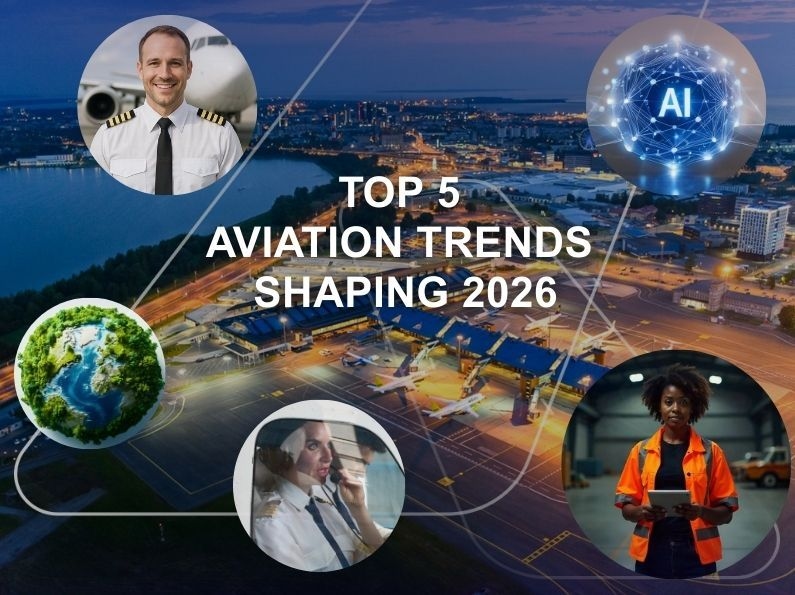
The aviation industry is entering 2026 amid rapid transformations, from accelerating technology to sustained hiring pressures. After reviewing global forecasts and market signals, here are the top five trends every recruiter, operator, and aviation professional should watch this year.
1. AI & Digital Technologies Move from Pilot Projects to Operational Core
In 2026, artificial intelligence will shift from an experimental add-on to being a central operating layer across airlines and airports, integrating itself into optimising planning, disruption management, real-time decisioning, and customer experience. Carriers and ground handlers increasingly embed AI into crew planning, maintenance forecasting, and passenger services, fundamentally reshaping workflows across the value chain.
2. Workforce Demand Remains Unrelenting
Despite economic cycles, the need for pilots, engineers, and technicians remains intense. Long-term demographic shifts, including retirements and airline expansion plans, underscore a structural talent gap that won’t be solved by hiring alone. Industry reports predict continued pilot scarcity, while technicians and certified maintenance personnel remain among the hardest to fill roles.
3. Sustainability & SAF Become Business Imperatives
Environmental regulation and decarbonization commitments are no longer “nice to have.” Sustainable Aviation Fuel (SAF) adoption grows, but supply constraints and cost pressures mean airlines must adapt both operations and workforce strategies to manage the financial impact of net-zero pathways.
4. MRO & Fleet Lifecycle Pressures Create New Demand
With ongoing backlogs in aircraft production and aging fleets, MRO (Maintenance, Repair & Overhaul) demand will surge. Operators are scheduling more heavy maintenance, reshoring capabilities, and leveraging predictive analytics, driving a premium on skilled line and heavy maintenance personnel.
5. Skills Evolution: New Roles, Reskilling & Cross-Training
The nature of aviation work is evolving. Beyond traditional roles, digital skills, AI literacy, data analytics, and advanced diagnostics are becoming essential across pilot training, engineering diagnostics, and airport operations. Aviation professionals who couple domain expertise with tech fluency will be the most in demand.
MHC Aviation’s Prediction
At MHC Aviation, we spend a lot of time listening to airlines, MROs, and aviation professionals on the ground. That perspective gives us a front-row seat to how these trends are actually playing out in day-to-day operations.
What we’re seeing is that many operators aren’t just asking who to hire, but how to prepare their teams for what’s coming next.
That’s where our work naturally fits in. Whether it’s helping airlines secure experienced pilots and engineers ahead of peak demand, supporting MROs as maintenance needs grow, or thinking longer-term about emerging skill sets in digital maintenance and next-generation aircraft, our focus stays practical and people-first.
We also see global mobility becoming increasingly important, with talent moving across borders and operators needing flexible, compliant ways to access the right expertise at the right time.
Looking ahead to 2026, success in aviation won’t come from reactive hiring alone. It will come from building resilient, adaptable teams that can grow alongside the industry. Supporting that journey quietly, consistently, and with deep sector knowledge is where MHC Aviation continues to add value.