Ferry Flights Explained: Why Do Aircraft Fly Empty?
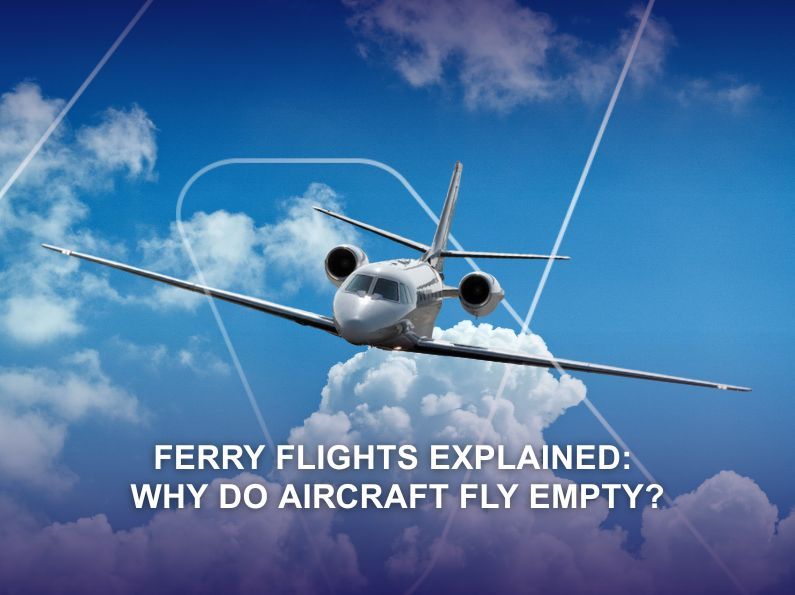
Have you ever wondered why an aircraft is flying without passengers? It may be a ferry flight.
Ferry flights are an important but often misunderstood part of aviation. They allow aircraft to be moved between locations for reasons ranging from maintenance and storage to delivery, changes of operator and operational repositioning.
For passengers, the aircraft may appear to be simply flying from A to B. Behind the scenes, however, there can be a significant amount of planning involved. So, what exactly is a ferry flight, why are they necessary, and what does it take to operate one?
What Is a Ferry Flight?
In simple terms, a ferry flight is a flight undertaken to move an aircraft from one location to another for a specific operational purpose rather than to carry passengers as a normal commercial service.
The FAA describes a ferry flight as a flight for purposes including returning an aircraft to base, delivering an aircraft from one location to another, or moving an aircraft to or from a maintenance base.
EASA similarly describes ferry flights as flights that change the location of an aircraft, including movements to and from maintenance bases and transfers between manufacturers, refurbishment locations, previous owners, lessors, lessees, storage locations and operators.
In other words, the aircraft needs to get somewhere, but it is not operating a normal passenger service to do it.
Why Do Aircraft Need Ferry Flights?
1. Moving an Aircraft for Maintenance
One of the most common reasons is maintenance.
An aircraft may need to be moved from its current airport to a maintenance facility capable of carrying out a particular inspection, repair or modification.
The aircraft therefore needs to fly to the maintenance location before the work can begin.
2. Delivering a New Aircraft
When an airline takes delivery of a new aircraft, it has to get from the manufacturer or another delivery location to its new operator. That journey is commonly referred to as a delivery flight and can fall within the broader category of aircraft relocation or ferry operations.
For a new aircraft, the journey may be the first time it operates outside the manufacturer's environment.
3. Changing Operators
Aircraft frequently move between airlines and leasing companies. When an aircraft leaves one operator and is transferred to another, it needs to be repositioned. This could involve a relatively short domestic flight or an international journey involving several sectors.
4. Moving an Aircraft to Storage
Aircraft are sometimes moved to storage facilities when they are temporarily out of service. This can happen for commercial, operational or fleet-management reasons. When the aircraft is ready to return to service, it may need another ferry flight to its operator, maintenance facility or another location.
5. Returning an Aircraft to Its Base
An aircraft may also need to return to its normal operating base after maintenance, refurbishment, storage or another operational event. The FAA specifically includes returning an aircraft to base within its definition of a ferry flight.
Is a Ferry Flight the Same as a Positioning Flight?
Not necessarily. The terms can sometimes be used loosely, but aviation regulations distinguish between different types of flights.
EASA's current Air Operations rules, for example, describe a positioning flight as moving an aircraft and its aircrew to an aerodrome from which a subsequent commercial air transport operation will take place. Ferry flights, by contrast, cover aircraft movements undertaken to change the aircraft's location for purposes such as maintenance, delivery or transfer.
The distinction matters because the purpose of the flight can affect how the operation is planned, categorised and regulated.
What Is It Like to Operate a Ferry Flight?
From the cockpit, a ferry flight may look similar to any other flight.
The aircraft still has to be properly planned and operated.
The crew must consider factors such as:
- Aircraft technical status
- Route and airspace requirements
- Weather
- Fuel planning
- Airport suitability
- Weight and balance
- Navigation requirements
- Crew qualifications
- Operational restrictions
- Required permissions and documentation
The important difference is that the aircraft's configuration and operating conditions may not always be the same as those of a normal passenger service. This means the flight requires careful planning rather than simply treating it as an empty scheduled service.
Can a Ferry Flight Operate an Aircraft That Is Not Fully Airworthy?
This is where the term ferry permit can sometimes cause confusion. A ferry flight does not automatically mean that an aircraft is unairworthy or operating under special permission.
However, in some circumstances, an aircraft that does not currently meet all applicable airworthiness requirements may be permitted to make a specific flight if it is capable of safe operation and the appropriate authorisation has been obtained.
The exact requirements depend on the aircraft, registration, operator, jurisdiction and circumstances of the flight.
For aviation professionals, this is an important distinction:
A ferry flight is a type of operational purpose. A special flight permit is a regulatory authorisation that may be required for certain ferry operations. They are not interchangeable terms.
What Can Make a Ferry Flight Different?
Some ferry flights are completely routine. Others can be considerably more complex. For example, an aircraft being moved after maintenance, may have specific operational limitations that need to be considered.
EASA's guidance gives examples of ferry flights that may involve conditions such as an unpressurised flight, gear-down flight or operation with one engine inoperative, where permitted under the applicable conditions.
This is why ferry flying should never be thought of simply as "flying an empty aircraft." The aircraft's condition, the reason for the flight and the applicable approvals all matter.
Who Flies Ferry Flights?
Ferry flights can be operated by different types of flight crew depending on the aircraft, operator and purpose of the flight.
For commercial aircraft, the flight may be conducted by the airline's own flight crew or by appropriately qualified crews engaged specifically for the transfer.
For aircraft being delivered, maintained or transferred between operators, specialist ferry-flight crews may also be involved.
For pilots, these operations can provide exposure to different aircraft, routes, airports and operational environments, but they also demand a strong understanding of aircraft limitations and careful preparation.
Are Ferry Flights Always Short?
No. The distance of a ferry flight depends entirely on why and where the aircraft needs to be moved. A flight might be a short hop between two nearby airports.
It could also involve a long international journey, potentially requiring multiple sectors and careful planning around fuel, crew, permissions and suitable diversion airports.
The aircraft itself can also influence the planning. A narrow-body aircraft being transferred across continents, for example, may require a different strategy from a long-range wide-body aircraft.
What About Fuel?
Fuel planning is particularly important on aircraft relocation flights. The route may not have been designed around the same considerations as a normal scheduled passenger service.
For example, the crew may need to consider:
- Suitable fuel stops
- Airport availability
- Weather
- Aircraft range
- Payload
- Alternate airports
- Airspace restrictions
- Navigation requirements
An aircraft operating without passengers may have more flexibility in terms of payload, but that does not automatically make the flight simple. Operational requirements and aircraft limitations still determine what is possible.
Ferry Flights and Aircraft Deliveries
One of the most interesting examples is the delivery of a new aircraft. A new aircraft can travel from its manufacturing location to its future operator, sometimes crossing several countries or regions.
Before the flight, the operator and relevant teams need to ensure that the aircraft, crew, documentation, route and regulatory requirements are all in place. Once it reaches its new home, the aircraft may then undergo additional preparations before entering normal passenger service.
For aviation enthusiasts, a delivery flight can therefore represent the beginning of an aircraft's operational career.
Why Are Ferry Flights Important to Aviation?
Ferry flights rarely receive the same attention as passenger services, but they are essential to keeping the aviation system moving.
Aircraft need to reach:
- Maintenance facilities
- New operators
- Storage locations
- Operating bases
- Refurbishment facilities
- Delivery locations
Without these movements, aircraft could not efficiently move through the different stages of their operational lives. For airlines and lessors, the ability to move an aircraft efficiently can also have commercial implications. A delay in transferring an aircraft to its next operator or maintenance location can affect fleet availability, schedules and ultimately revenue.
The Bigger Picture
A ferry flight might look simple from the ground: an aircraft takes off from one airport and lands at another.
But behind that movement is often a carefully coordinated operation involving flight crews, maintenance teams, flight operations, dispatchers, regulatory authorities and other aviation professionals.
That is what makes ferry flying such an interesting part of aviation. It sits at the intersection of flight operations, aircraft maintenance, regulation and fleet management. And while passengers may never see these flights, they play an important role in keeping aircraft where they need to be.
At MHC Aviation, we know that aviation is made up of much more than the flights passengers see on a departure board. Behind every aircraft movement is a network of professionals whose expertise keeps the industry operating safely and efficiently.
The next time you see an aircraft flying without passengers, there may be a lot more going on than meets the eye. It could simply be on its way to its next chapter.