Can Aviation Reach Net-Zero by 2050?
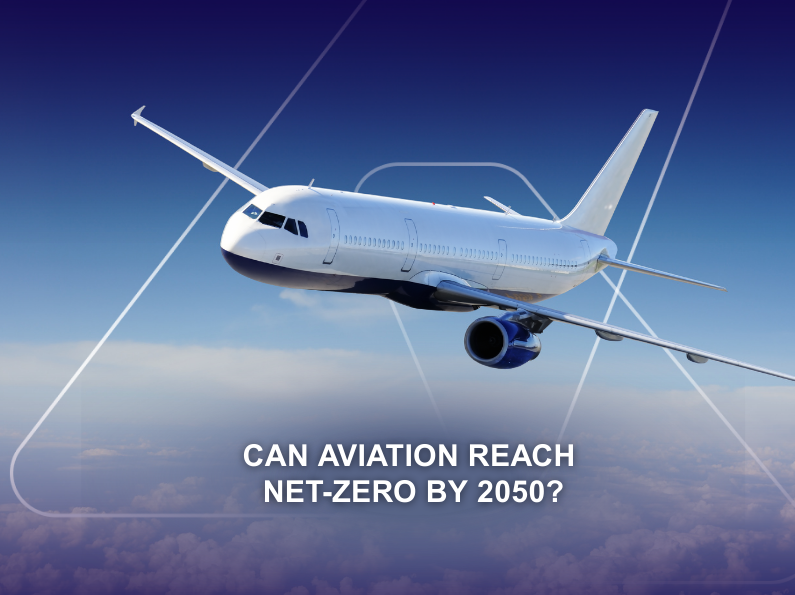
The global aviation industry has set itself an ambitious goal: achieving net-zero carbon emissions by 2050. For an industry that connects economies, enables global mobility, and underpins international trade, this target represents both a necessary evolution and a formidable challenge.
But is it realistic?
The answer depends on how we interpret the future of aviation, through an optimistic, pessimistic, or realistic lens.
Why Net-Zero Matters for Aviation
Aviation currently contributes around 2–3% of global CO₂ emissions, but its impact is growing as air travel demand increases. Unlike other sectors, aviation has limited immediate alternatives to liquid fuels, making decarbonization more complex.
At the same time, regulatory pressure is intensifying. We see this trend with Governments introducing carbon pricing and emissions mandates. Investors are demanding sustainability commitments and passengers are also becoming more environmentally conscious
From an optimistic perspective, the aviation industry has already begun its transformation. Sustainable Aviation Fuel (SAF) is currently the most viable pathway to reducing emissions as it can reduce lifecycle emissions by up to 80%. It remains compatible with existing aircraft and infrastructure and is increasingly supported by governments and airlines. Major airlines are signing long-term SAF agreements, and production is expected to scale rapidly over the next decade.
Technological Innovation such as more fuel-efficient engines, lighter materials and emerging hydrogen and electric aircraft concepts also show significant promise. While these technologies are not yet ready for long-haul aviation, they could significantly reduce emissions in short- and medium-haul markets.
Operational Efficiency is another key factor airlines are improving on by implementing AI-driven flight planning, by reducing taxi times and optimized routes and by modernizing air traffic management systems
For the first time, the industry is aligned. Airlines, manufacturers, and regulators share a common goal while international frameworks are being developed to guide progress.
The pessimistic view, on the other hand, poses different concerns. SAF production remains extremely limited which currently accounts for less than 1% of global jet fuel supply. Production costs remain significantly higher than conventional fuel and scaling requires massive investment and infrastructure. Without a dramatic increase in supply, SAF alone cannot close the gap.
Demand growth within the industry may outpace progress as global air travel is expected to double by 2040. This creates a paradox where efficiency improvements reduce emissions per flight, but total emissions may still increase due to demand.
Technology Readiness is another factor we can pick apart. Hydrogen and electric aircraft face major hurdles like energy density limitations, complex infrastructure requirements, specific certification and safety challenges. These solutions may not be viable at scale until well after 2040.
Regulatory Fragmentation regionally is also an existing barrier. Different regions are adopting inconsistent policies, creating competitive imbalances, increased costs for airlines and operational complexity. In the worst case, sustainability efforts could fragment the global aviation market.
Cost Burdens are a factor we cannot cover when talking about the pessimistic point of view. Decarbonization will come at a price because of higher fuel costs, increased ticket prices and even potential demand suppression. This raises a critical question: who pays for sustainable aviation?
From a realistic point of view, the most likely outcome lies between ambition and constraint. SAF will play the dominant role in emissions reduction, but it will most likely scale gradually with costs remaining higher in the medium term. Blending mandates will drive adoption
Incremental Innovation will serve as key with continuous improvements in aircraft efficiency, smarter operations and digitalization and partial adoption of new propulsion technologies
Industry Adaptation will play a key role as airlines learn to adapt their business models, rethinking route networks, investing in new fleets and managing higher operating costs
Workforce Transformation will also reshape aviation careers as new roles open up in sustainability and energy management. There will be an increased focus on efficiency and digital operations as continued demand for skilled professionals across the industry rises.
✈️ So, Can Aviation Reach Net-Zero by 2050?
The answer is that it is possible, but not without compromise. It will require unprecedented collaboration, and will depend heavily on policy support and investment. It will likely involve higher costs for airlines and passengers. The industry may not achieve perfect decarbonization, but it is moving toward a lower-emission future that balances growth with responsibility.
As aviation evolves, so does the need for skilled, adaptable talent. MHC Aviation supports airlines worldwide by sourcing and deploying experienced pilots, MRO professionals, and cabin crew, ensuring operations remain efficient and resilient.
Beyond recruitment, MHC Aviation also provides payroll, HR, and operational support, allowing airlines to focus on navigating the future of aviation with confidence.