Essential Skills for Cabin Crew in 2026
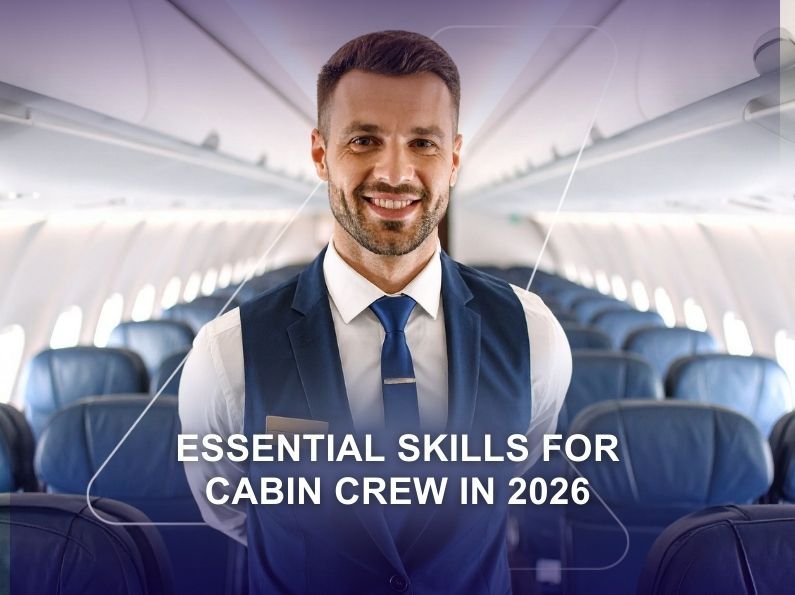
What it means to be a cabin crew is an ever-evolving landscape. As the aviation industry enters 2026, airlines are no longer looking only for friendly faces and good customer service. They are seeking multi-skilled professionals who can operate under high-pressure environments, roll with the punches and deliver exceptional passenger experiences while maintaining the highest safety standards.
We, at MHC Aviation, work closely with airlines, operators, and aviation service providers worldwide. Therefore, we can clearly see how cabin crew requirements are shifting. .
Here are the essential skills every successful cabin crew professional will need in 2026 in order to be successful in the job space.
1. Safety Leadership, Not Just Compliance
One of the core foundations of a cabin crew profession is safety. In 2026, we see a trend where airlines are shifting from procedural compliance to a culture of safety leadership.
Cabin crew must:
- Take proactive responsibility for cabin risk management
- Identify early warning signs of safety issues
- Communicate clearly in high-stress situations
- Lead passengers calmly during disruptions and emergencies
The new generation of cabin crews are not just following pre-set manuals. They are decision-makers, leaders, and safety ambassadors.
2. Emotional Intelligence & Passenger Psychology
The profile of a person we would deem a typical airline passenger is changing constantly. Post-pandemic travel behaviour, anxiety around delays, disruption, and security, and growing diversity of passenger needs mean that emotional intelligence is now a core operational skill.
Essential capabilities include:
- De-escalation and conflict management
- Empathy under pressure
- Cultural sensitivity
- Mental health awareness
- Trauma-informed communication
In 2026, hospitality no longer cuts it. It is the bare minimum. But fold in psychological competence with the existing culture of hospitality, and we have a winner.
3. Digital & Technology Fluency
Cabin crew are increasingly operating in digitally integrated cabins.
They must be confident using:
- Electronic flight bags (EFBs)
- Digital reporting systems
- AI-supported service platforms
- Passenger data systems
- Cabin management software
- Real-time disruption and rebooking tools
Digital competence, once considered a bonus, has now become a core employability requirement.
4. Adaptability in a Volatile Industry
Disruption is now structural in aviation. Weather events, operational shortages, airspace restrictions, geopolitical instability, and infrastructure pressure are part of daily operations.
To pursue a cabin crew career in 2026, you must demonstrate:
- Operational flexibility
- Rapid problem-solving
- Psychological resilience
- Change readiness
- Learning agility
Airlines are increasingly selecting crew with high resilience to rapid change, and the extent to which they can adapt has become a key factor to consider.
5. Intercultural & Multilingual Competence
Global mobility continues to expand, and so does passenger diversity.
- Key expectations include:
- Cross-cultural communication skills
- Multilingual capability
- Cultural awareness training
- Inclusive service delivery
- Respect for religious and cultural sensitivities
In modern aviation, cultural intelligence is part of operational intelligence.
6. Professional Brand Representation
Cabin crew are no longer only service providers. They are brand representatives.
Airlines expect crew to:
- Represent corporate values consistently
- Align with brand tone and service philosophy
- Act as ambassadors on social media platforms
- Maintain professional digital identities
- Support brand trust and reputation
The cabin crew is essentially an extension of the brand, and the way they represent themselves is an extension of brand representation.
7. Team Dynamics & Leadership Readiness
Flat hierarchies and fast rotations require strong interpersonal competence.
Essential team skills include:
- Situational leadership
- Clear communication
- Collaborative problem-solving
- Authority without aggression
- Peer accountability
Cabin crew members are expected to step up when need be and lead with situational awareness under pressure.
8. Career Mindset & Continuous Development
Airlines increasingly favour crew who explicitly display interest in career development.
This includes:
- Continuous training engagement
- Upskilling and reskilling
- Long-term career planning
- Professional development investment
- Mobility across roles and fleets.
At MHC Aviation, we see cabin crew recruitment moving away from traditional hiring models and towards capability-based selection.
Airlines are no longer asking only: “Can this candidate do their job?”
They are asking: “Can this person grow with the airline, adapt to industry change, and evolve with the job description and the airline?”
As aviation continues to evolve, cabin crew will remain one of the most critical pillars of airline operations. This is not just because hospitality on board is a critical defining factor, but because it ties back into the safety culture, brand trust, passenger confidence, and operational stability.
To be a modern cabin crew professional in 2026, candidates are expected to not just have experience, but also have the skills, mindset, adaptability, and leadership capacity.
At MHC Aviation, we are committed to supporting airlines and aviation professionals in building future-ready cabin crew teams, aligned with the realities of modern aviation and the demands of a changing industry.