The History of Cabin Crew Uniforms
One of the most identifiable part of an airline’s branding (outside the obvious logo) would be their cabin crew uniforms. They are not just an extension of branding but also a symbol of safety and service thousands of feet in the air.
The story woven together by airline cabin crew uniforms in commercial aviation spans across decades, and it reflects the evolution of technology, culture, gender roles, branding and even national values. We, at MHC Aviation, have worked with airlines for decades and continue to see how uniforms play a powerful role in shaping perception, pride, and passenger experience within the aviation industry.
The Early Years: Authority, Function, and Trust
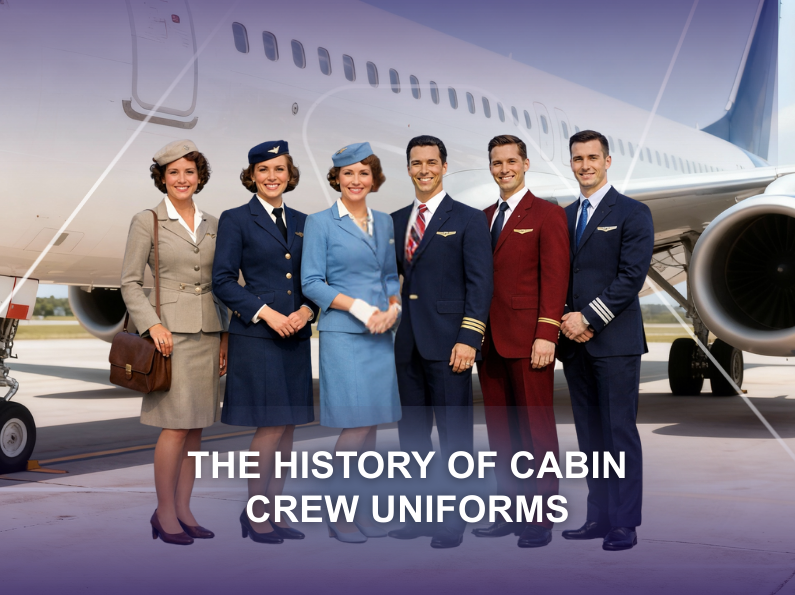
In the 1930s and 1940s, the first cabin crew uniforms were heavily inspired by nursing and military attire. In this era, flying was still quite new and intimidating, and therefore, the uniforms were designed with safety in mind. It focused on structured silhouettes, neutral colours, practical fabrics and clear symbols of authority and safety
These early uniforms were intended to communicate trust and professionalism, so as to reinforce the cabin crew’s role as safety-focused professionals rather than service staff.
The Jet Age: Fashion Takes Flight
The 1950s and 1960s marked a turning point. As jet travel became faster and more accessible, it presented a new opportunity. Airlines began using uniforms as a tool for brand and marketing. In this era, they introduced tailored suits and dresses, fashion-house collaborations, bolder colours and patterns along with accessories such as hats, gloves, and scarves.
Cabin crew uniforms evolved to ambassadors of glamour and modernity. They were no longer just safety and service staff but more elevated in their presentation.
Cultural Identity in the Cabin
As aviation expanded across the world, uniforms started to become more customizable in terms of the country of airline origin by reflecting cultural heritage and national identity. This was integrated across different regions when airlines started leaning into traditional textiles and patterns, culturally symbolic colours, regional tailoring styles and heritage-inspired accessories.
From Asia and the Middle East to Africa and Latin America, cabin crew uniforms evolved to balance international professionalism with cultural authenticity. These design choices helped airlines stand out from others within the same region as well as internationally by making an impression on their clients before the aircraft even took off, becoming a key branding and marketing tool.
In many countries, uniforms serve as a quiet but powerful expression of history, values, and hospitality traditions modernised to fit the aviation aesthetic while staying true to themselves.
The 1970s–1990s: Change, Individuality, and Progress
The late 20th century brought social and industry-wide transformation. This led to uniforms evolving in relation to changing gender roles, increased diversity in cabin crew teams, greater emphasis on comfort and mobility and expanded safety and operational responsibilities.
Designs started becoming more practical, inclusive, and adaptable. This was in direct response to cabin crew roles becoming more demanding and operationally complex.
Modern Cabin Crew Uniforms: Diversity, Inclusion, and Functionality
In today’s day and age, cabin crew uniforms are shaped by a wide range of considerations, including cultural sensitivity, branding, climate and route networks, body diversity and inclusivity, safety and ergonomics and sustainability and fabric technology.
As aviation has entered a global boom with the workforce sourced from around the world, airlines have taken steps in making uniforms more customizable by including trousers, dresses, head coverings, and adaptable accessories, so that crew members can express cultural identity while maintaining brand consistency.
Uniforms are no longer one-size-fits-all. They are designed to respect personal, cultural, and religious expression, while supporting operational performance and passenger confidence.
Uniforms as a Reflection of Airline Values
While, at first glance, cabin crew uniforms feel like it's all aesthetics, they are actually much more than that. They communicate how an airline views professionalism, its commitment to inclusion and diversity, its respect for cultural identity, and its focus on safety and operational excellence.
The MHC Aviation Perspective
At MHC Aviation, we understand that behind every uniform is a highly trained professional working in complex international environments.
As airlines expand across countries, cultures, and markets, successful cabin crew recruitment and staffing requires cultural awareness, respect for diversity, alignment with airline brand values and sensitivity to regional and operational differences.
While uniforms may differ, the core competencies of cabin crew professionals remain the same: safety, professionalism, adaptability, and service excellence, and recruiting such talent is what we, at MHC Aviation, specialise in.